PHOTOGRAPHY: NICOLA BERTELLETTI
Nicola Bertellotti photographs the archives of memory. Forgotten villas, palaces without owners, theaters where the last curtain fell decades ago. He seeks what resists ruin – that beauty which time layers, refines, rendering it truer.
He travels the world with the patience of one who knows that authentic beauty requires natural light, long exposures, no manipulation. Only time. And silence. “Abandonment gives me peace,” he says.
His work has been exhibited in museums from Naples (Hic Sunt Dracones) to Estonia (The Great Beauty) to New Orleans (Paradiso Perduto). He has published “Fenomenologia della fine” (2014) and “In Absentia” (2022). He is the custodian of frescoes no one looks at anymore, of staircases suspended in the void, of out-of-tune pianos – but his true objective is the preservation of a beauty that is vanishing.
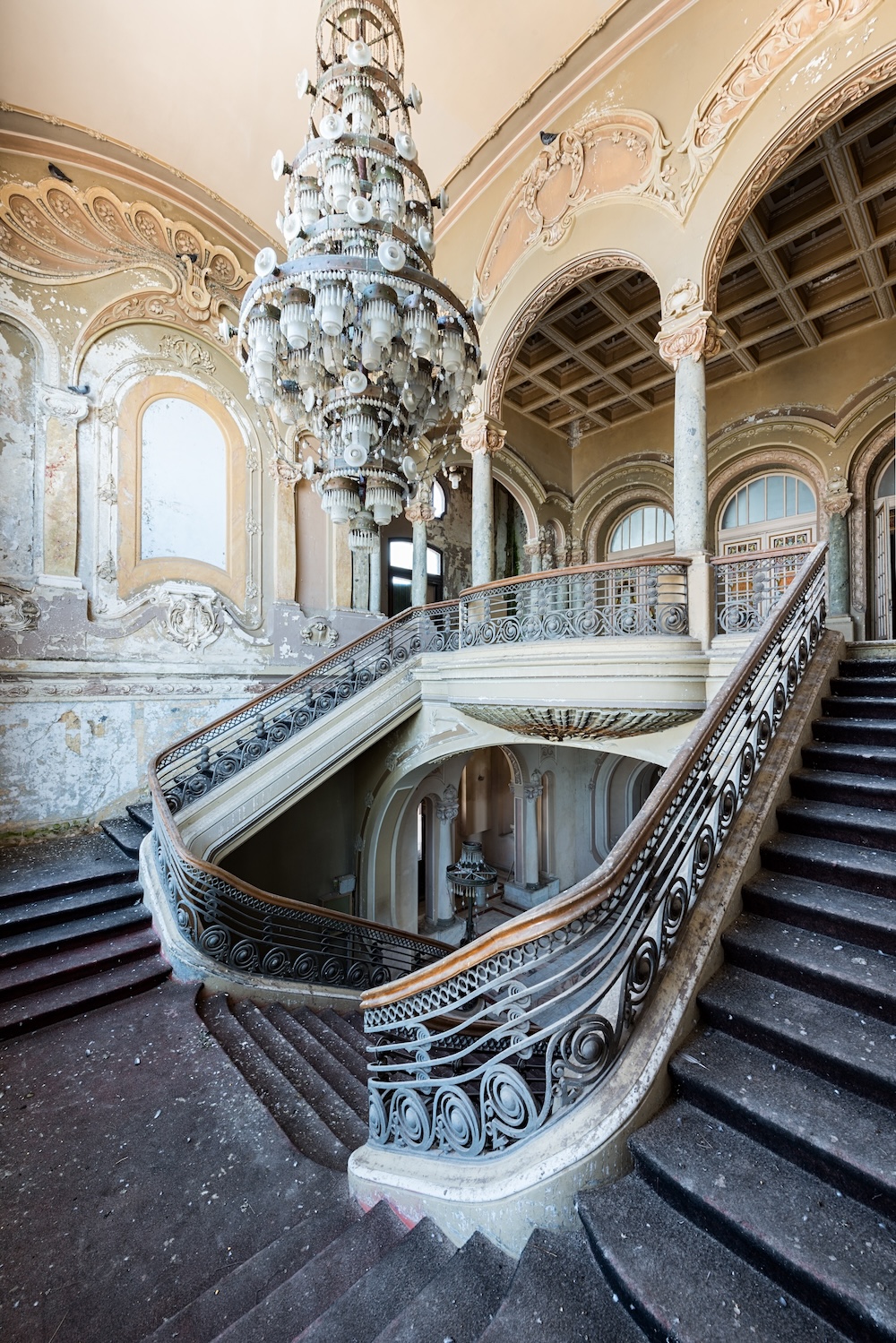
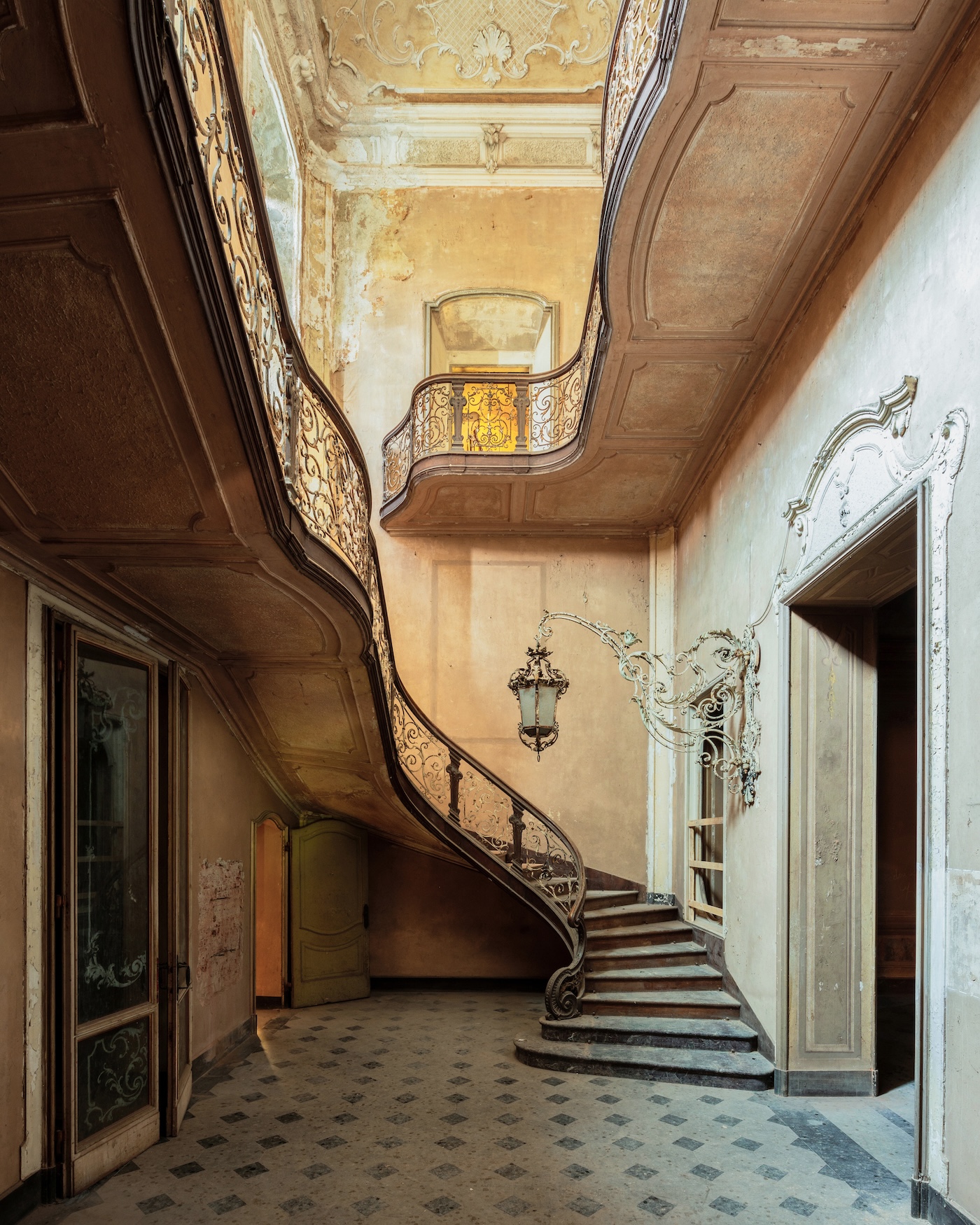
CONSTANȚA CASINO
The Casino of Constanța, inaugurated in 1910, was a symbol of Belle Époque and luxury on the Black Sea. It was severely damaged during the wars and subsequently abandoned for decades.
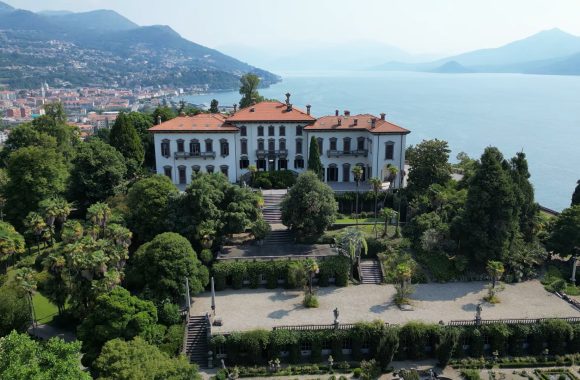
VILLA BORROMEO D’ADDA
Villa Borromeo d’Adda has been used as a set for various productions, including Marco Bellocchio’s film The Prince of Homburg (1997), which suits its noble context.
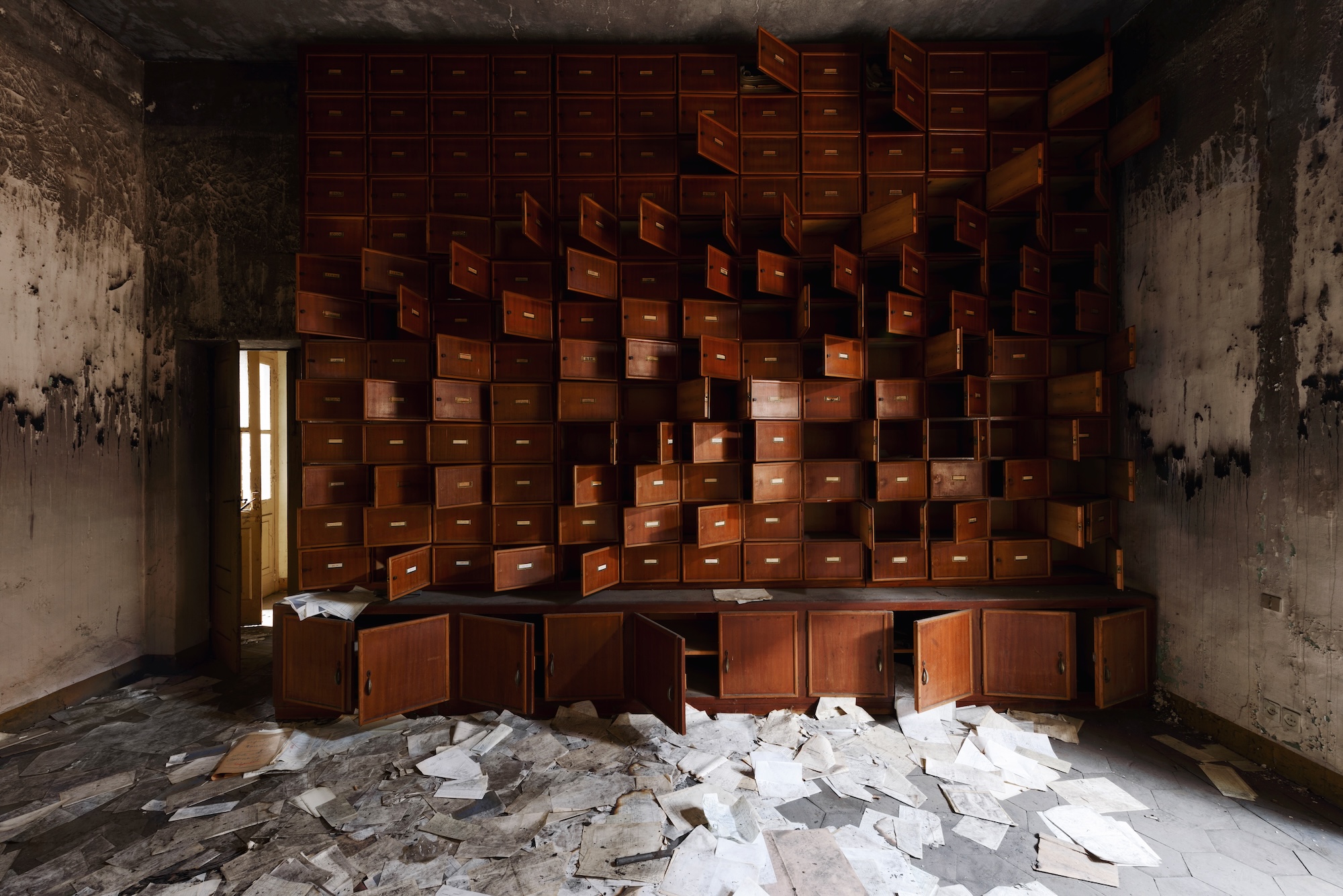
RACCONIGI ASYLUM
Built on an immense area and operational for over a century, it is a symbol of Italian psychiatric history before the Basaglia Law of 1978 and a place of immense suffering and forgotten stories.
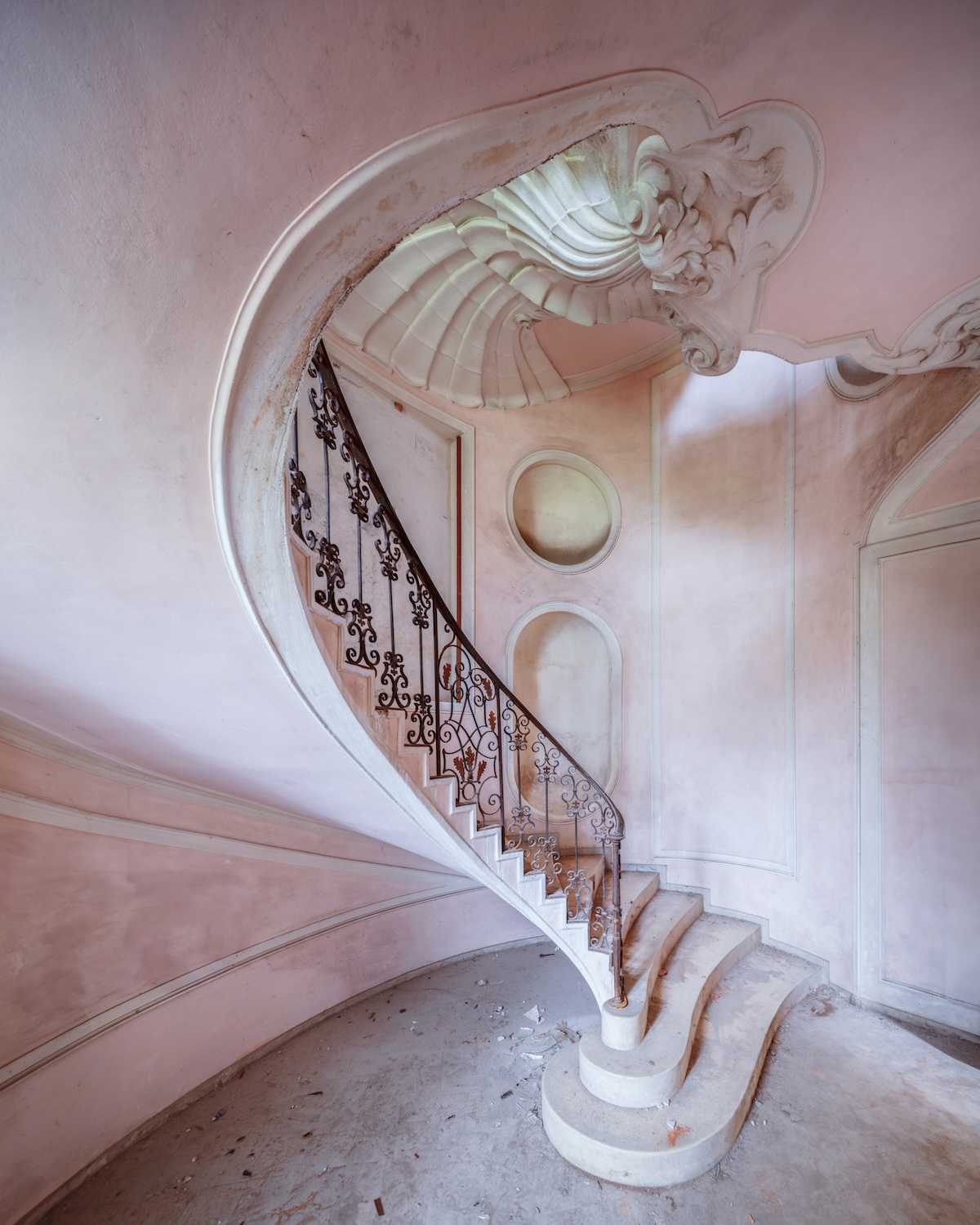
VILLA CARPENETO
Villa Carpeneto is a historic noble residence located in the municipality of La Loggia, in the plain south of Turin. Its distinctive internal stair-case has earned it the nickname “Shell Villa.”
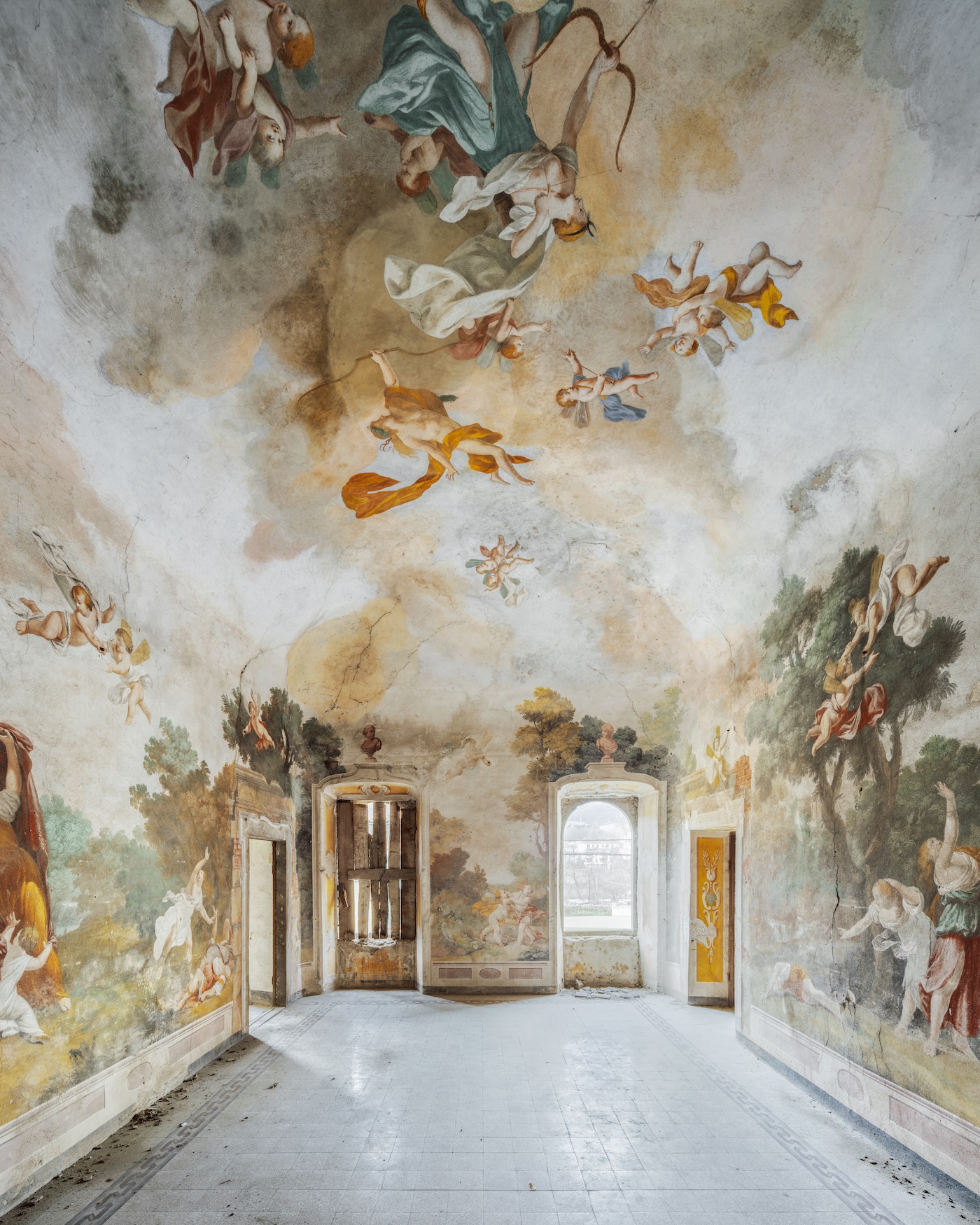
PALAZZO DAMIANI
The most famous fresco in the palace narrates the story of Niobe, punished for her hubris, whose children were killed. Niobe, transformed into stone, never stopped weeping.
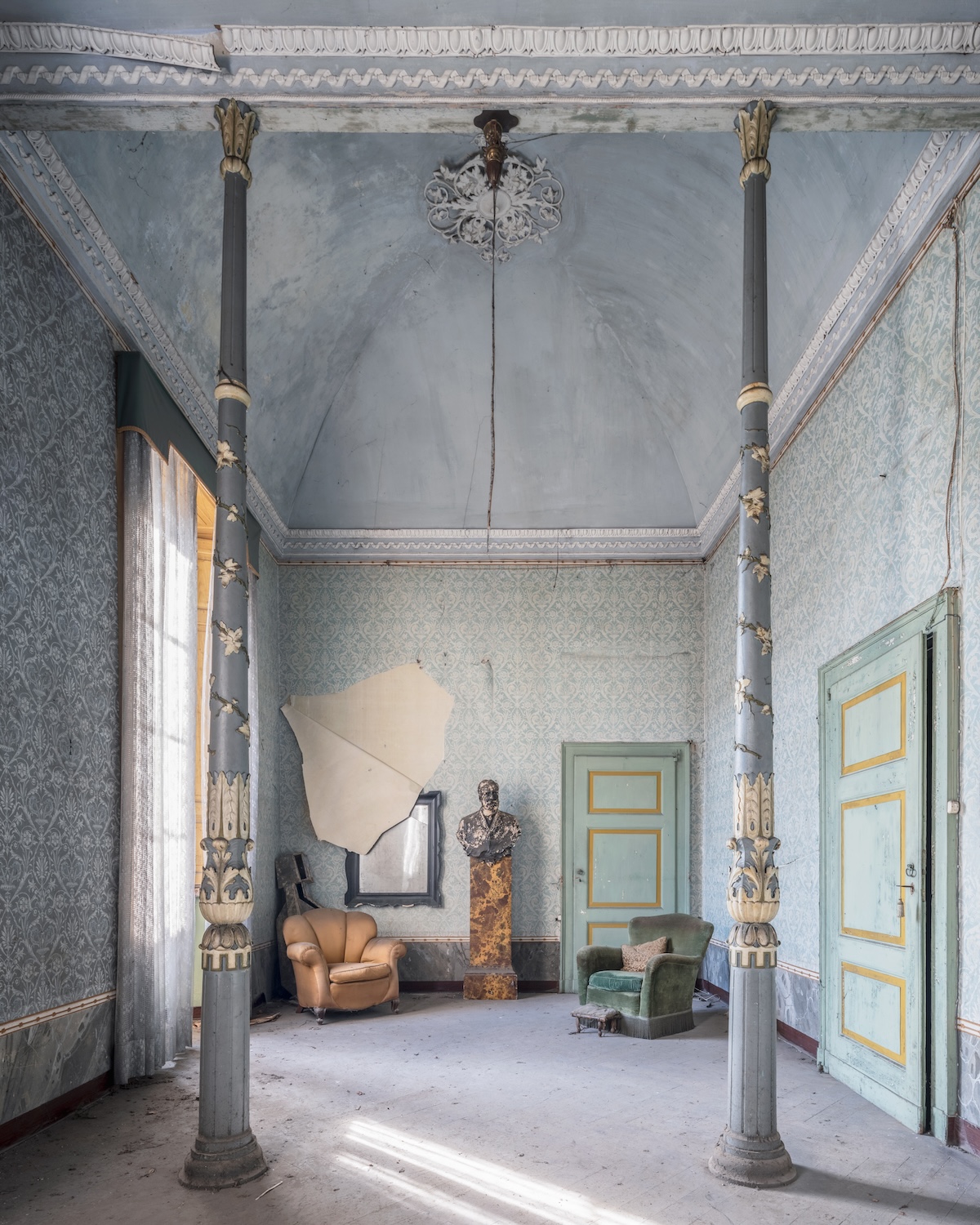
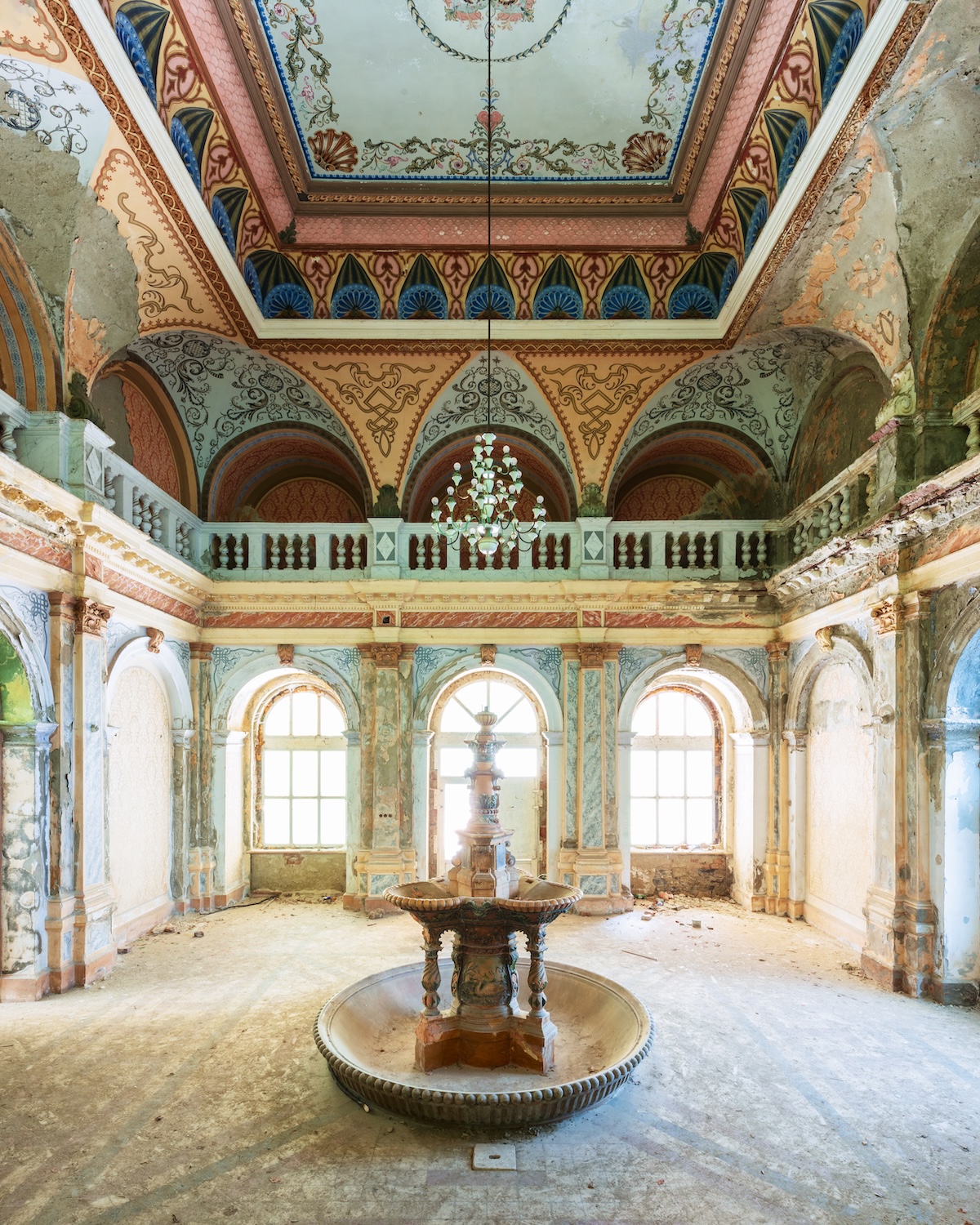
VILLA DOLCI
Villa Dolci is the mark of an era: the exuberant and rich Art Nouveau testimony of the industrial bourgeoisie that shaped the history of Somma Lombardo at the beginning of the twentieth century, now left in silence to narrate its lost prosperity.
BATHS OF BĂILE HERCULANE
This complex was one of the most important and luxurious thermal spa stations in Europe during the Habsburg period and, subsequently, part of Romania’s golden age before its collapse
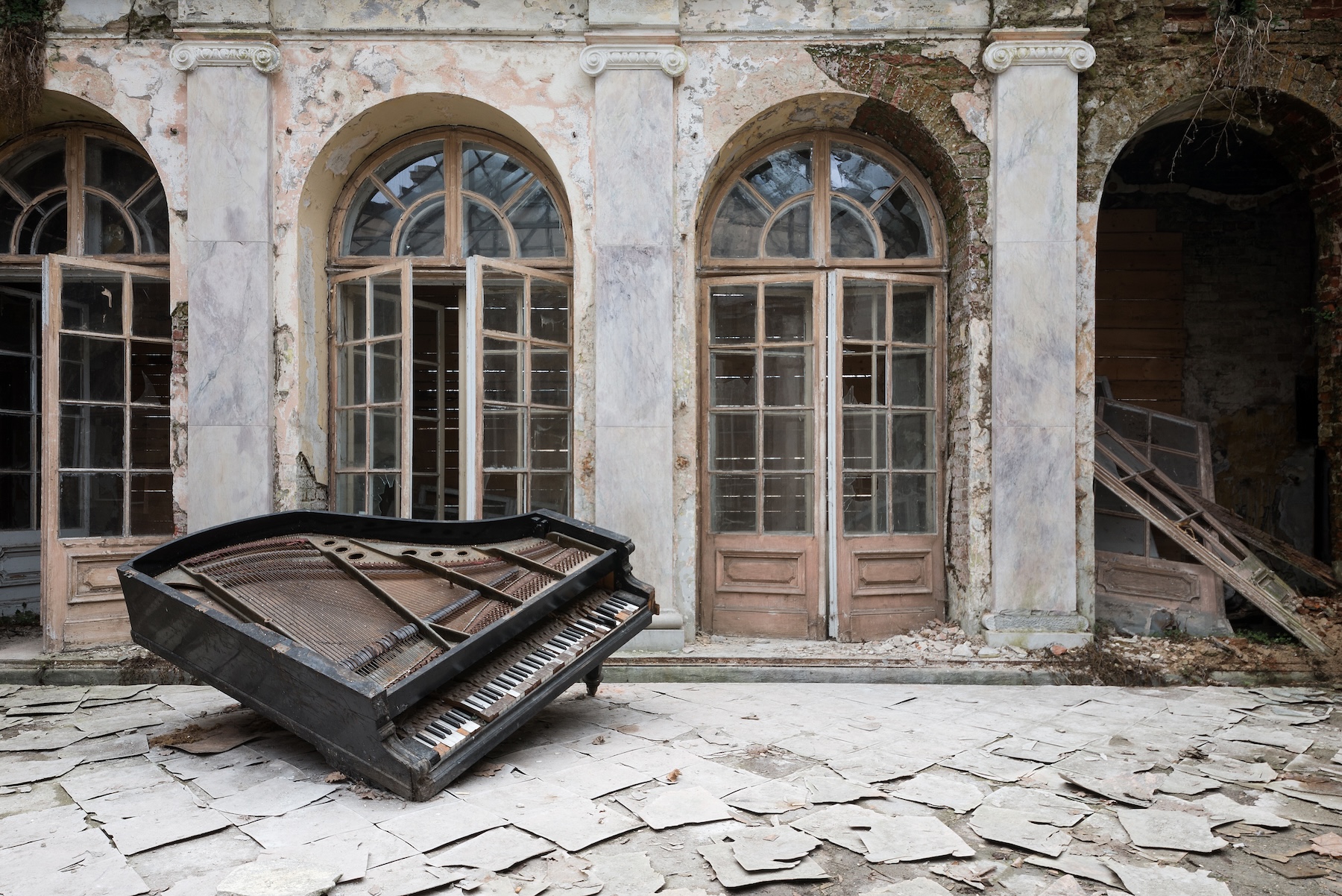
PALAZZO BRATOSZEWICACH
Palazzo Bratoszewicach is a historic residence located in the Łódź Voivodeship, Poland. In 1984 the palace suffered a severe fire that destroyed part of the roof. Since then, this piano has lain solitary in the courtyard.
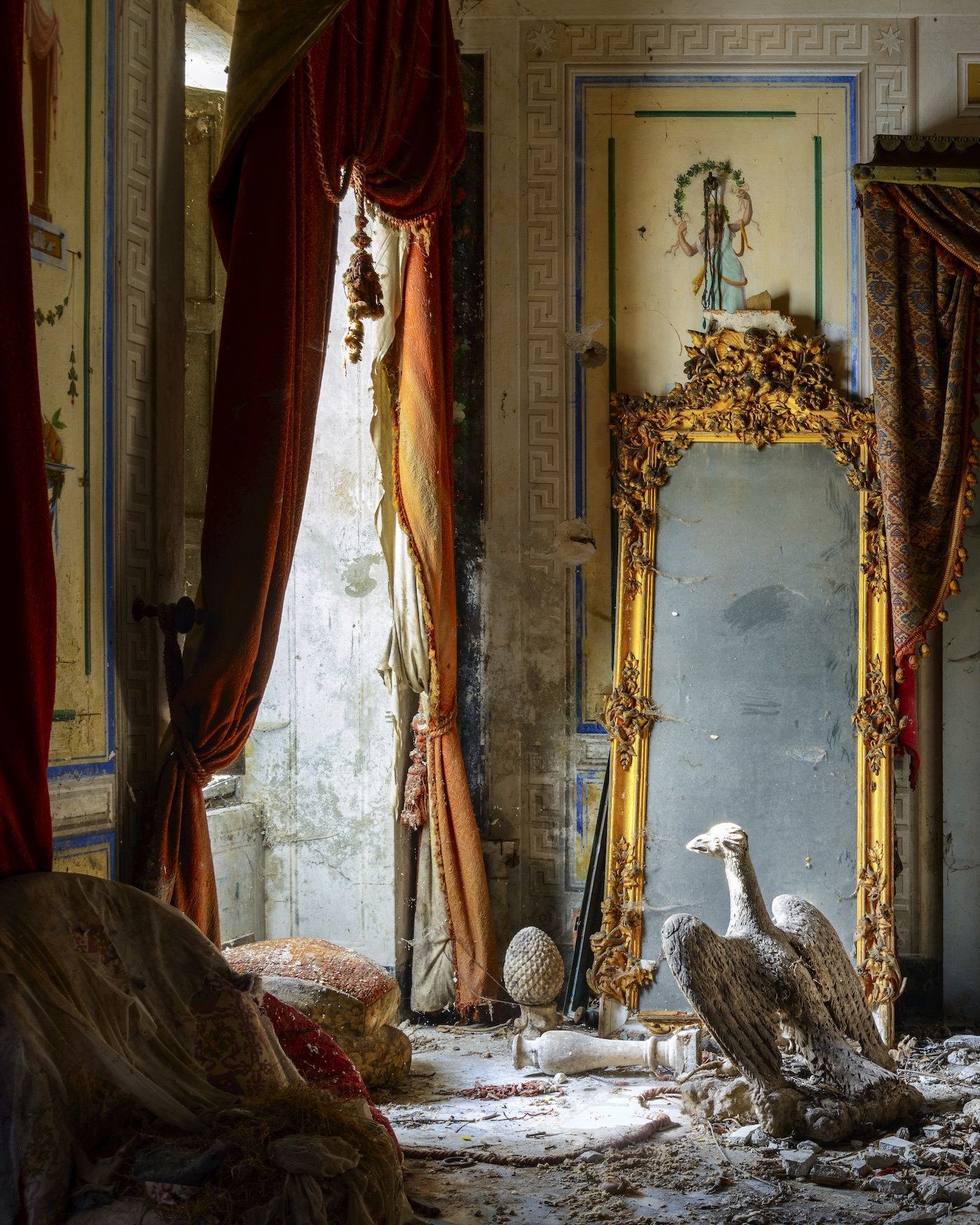
VILLA MASSONI
The four-story residence with an eight-hectare park was beloved by Napoleon’s sister, Elisa, and by the wife of poet Ezra Pound, who was arrested by the Allies for treason and later hosted at the end of World War II by the then-owners.
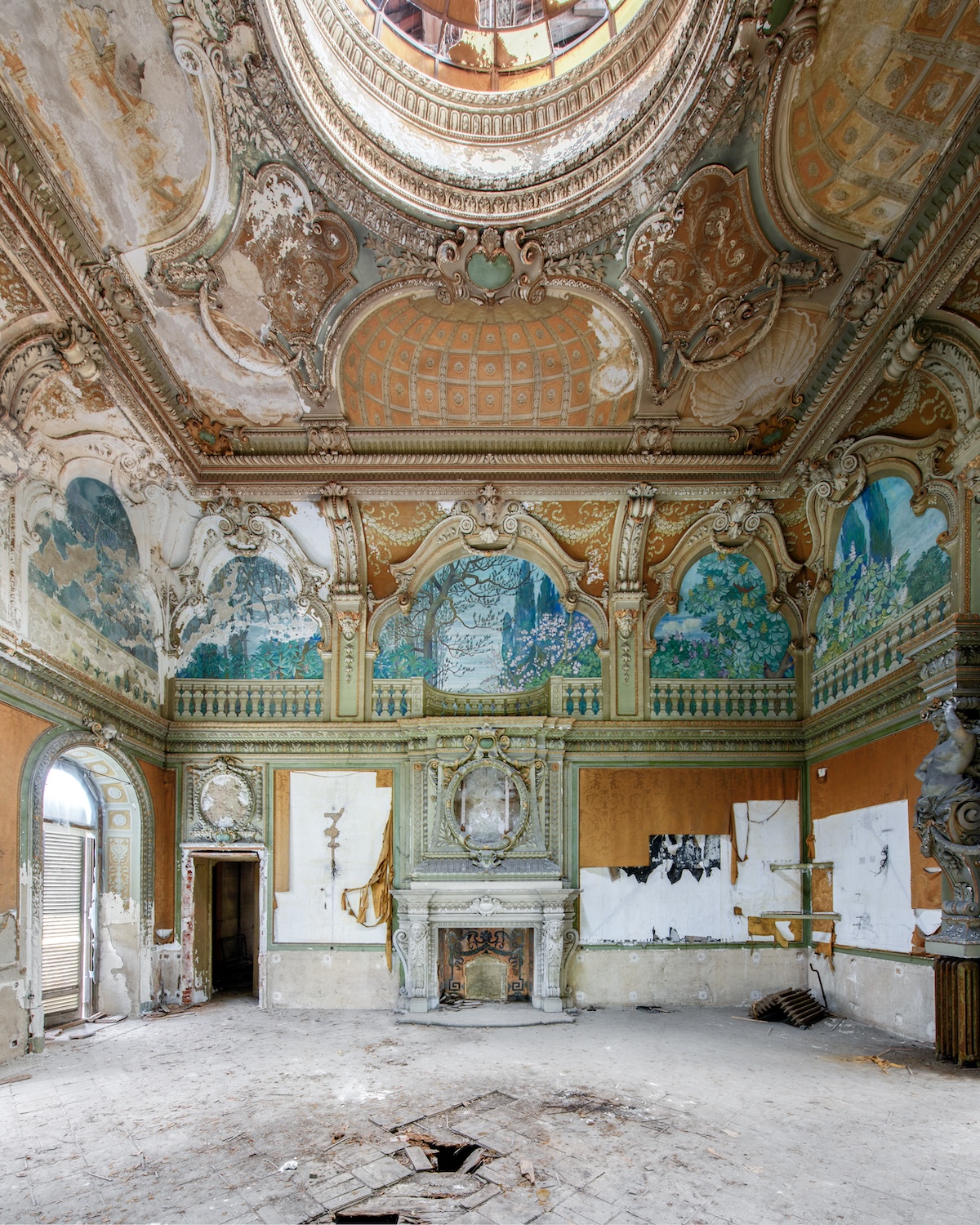
VILLA BECKER
Villa Becker was used for the final scenes of The Mother of Tears, the 2007 film that concludes the Three Mothers trilogy (Mater Suspiriorum, Mater Tenebrarum, and MaterLacrimarum)
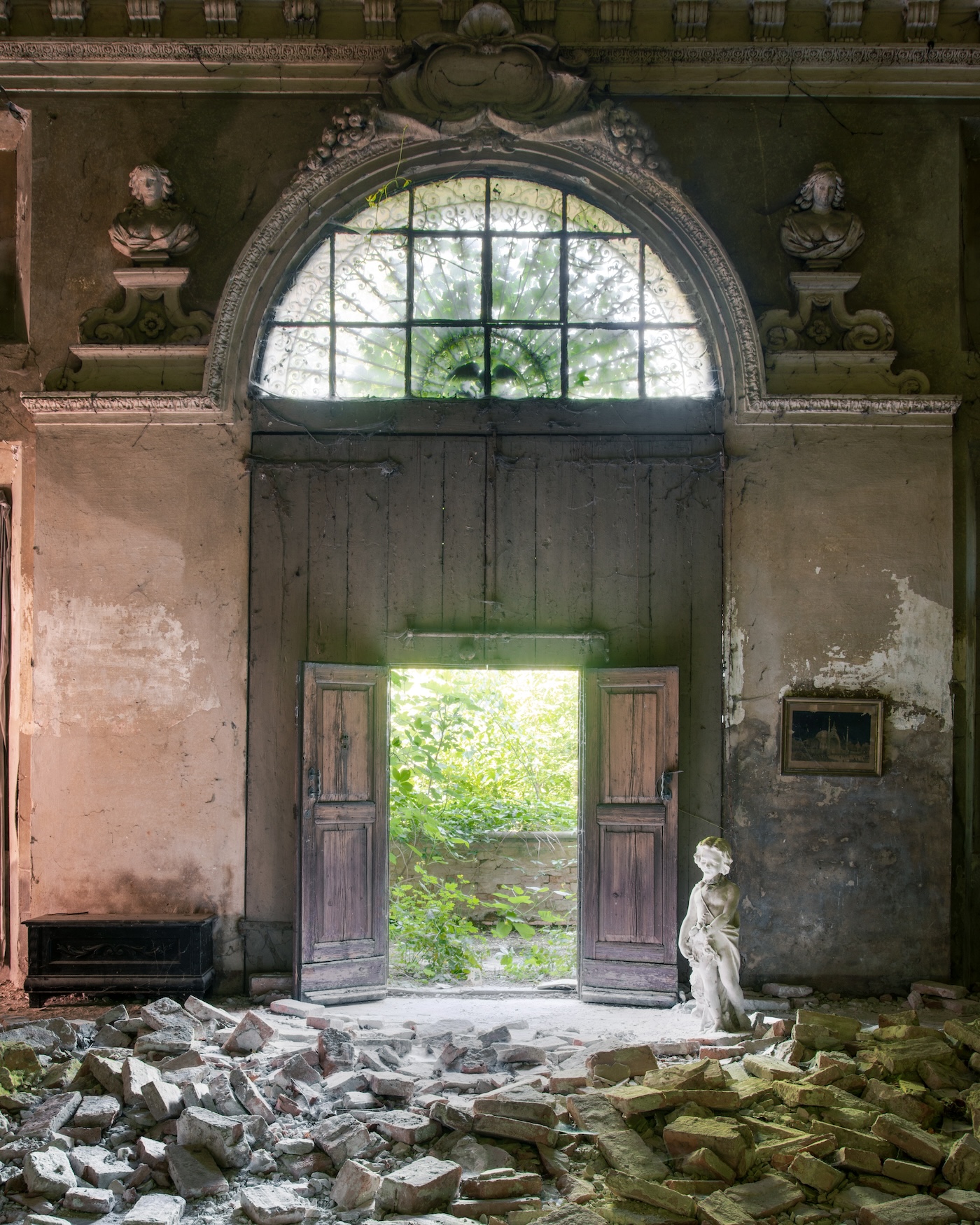
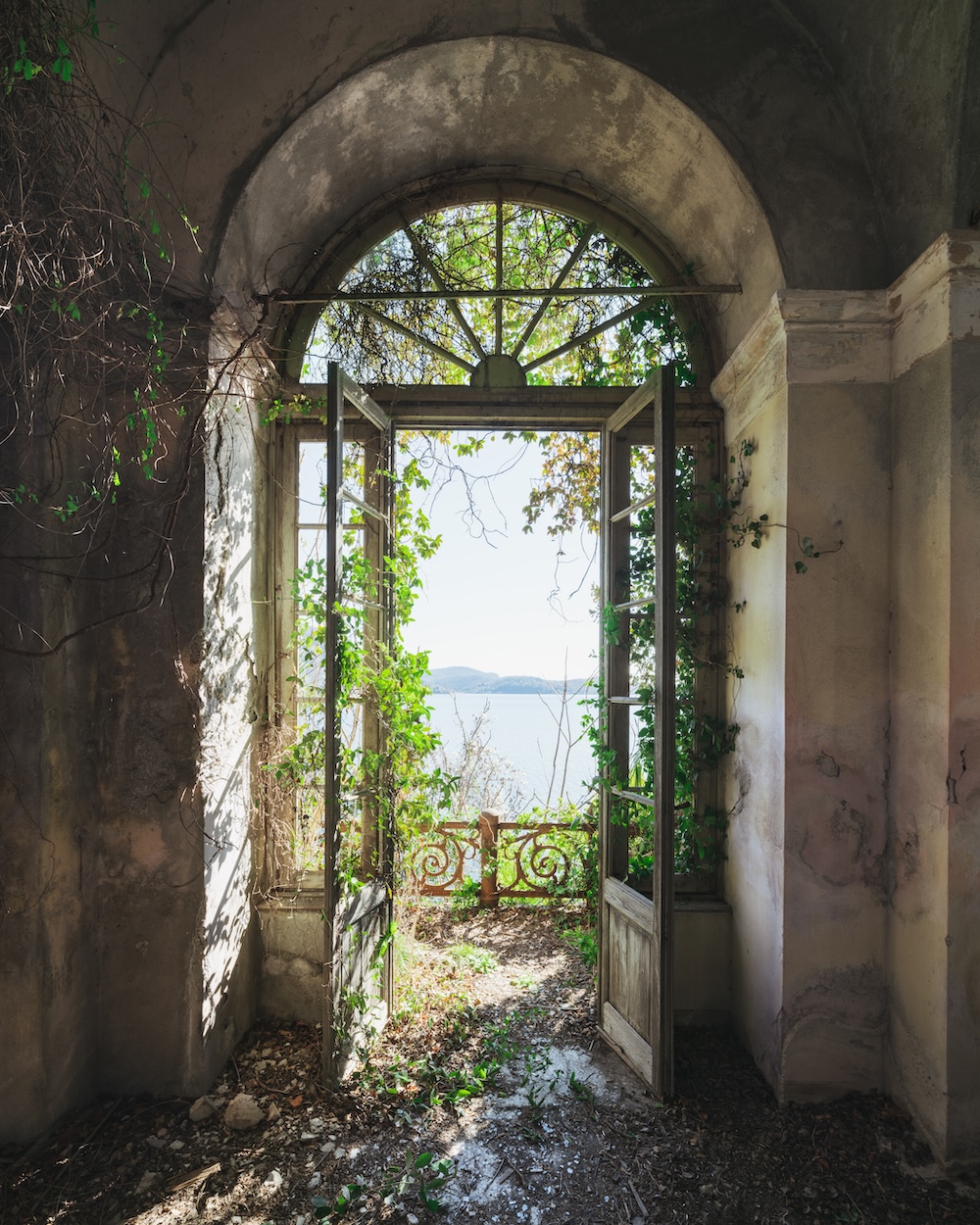
VILLA POSS
Villa Poss, overlooking Lake Maggiore, is famous primarily for hosting Winston Churchill in 1945, immediately after the war ended, while he was writing his memoirs.
VILLA GONZAGHESCA
The complex has ancient roots; the area where it stands was donated by Matilde di Canossa to the monks of San Benedetto in Polirone Abbey. It is considered the first example of a villa-castle built by the Gonzaga family, later becoming a hunting lodge and finally a prestigious noble residence of the cadet branch of the Gonzaga of Vescovato.